
Ingredients
Click or tap any item to check it off while you cook.
- 4 fillets wild Alaskan Pacific cod center-cut fillets, 6 oz each (680g)
- 1 ½ cups dehydrated shredded hash brown potatoes (90g dried)
- 1 large egg white, lightly whisked (33g)
- 2 tbsp Dijon mustard (30g)
- 1 tbsp mayonnaise (15g)
- 1 tbsp cornstarch or potato starch (8g)
- ½ tsp smoked sweet Spanish paprika (1.5g)
- ½ tsp garlic powder (1.5g)
- ¾ tsp kosher salt, divided (4.5g)
- ½ tsp freshly cracked black pepper, divided (2g)
- 1 spray high-smoke-point avocado oil spray (10ml)
- ½ cup mayonnaise for remoulade (115g)
- 2 tbsp fresh dill, finely minced (8g)
- 1 tbsp capers, drained and chopped (12g)
- 1 tbsp kosher dill pickle, finely diced (15g)
- 1 tsp Dijon mustard for remoulade (5g)
- 1 tbsp fresh lemon juice (15ml)
- ¼ tsp hot cayenne pepper or smoked paprika (0.5g)
Step-by-Step Instructions
Rehydrate and Dry Hash Browns
Submerge dehydrated hash brown shreds in hot water for 10 minutes until pliable. Drain thoroughly in a colander, spread over triple-layer paper towels, and squeeze until completely dry to the touch. Toss with smoked paprika, garlic powder, 1/2 tsp kosher salt, and 1/4 tsp black pepper.
Prep Cod and Apply Mustard Binder
Pat cod fillets bone-dry on both sides with paper towels. Season with remaining 1/4 tsp salt and 1/4 tsp black pepper, then dust with a sheer coat of cornstarch. Whisk egg white, Dijon mustard, and 1 tbsp mayonnaise until frothy; brush generously across the top and sides of each fillet.
Press the Potato Crust
Place each fillet into the seasoned potato shreds, spooning more shreds over the top. Press firmly with your palms so the potato filaments interlock and bond tightly against the fish. Lightly mist both sides with avocado oil spray.
Air-Fry to Golden Crisp Perfection
Preheat air fryer to 380°F (193°C). Place crusted fillets in basket in a single layer with 1-inch clearance. Air-fry for 9 minutes, flip gently with a fish spatula, mist lightly with avocado oil, and air-fry for 4 to 5 minutes more until deep golden brown and internal probe temperature registers 135°F to 140°F (57°C to 60°C).
Whisk Remoulade and Rest Fish
Whisk remoulade ingredients in a bowl until smooth and nappe consistency. Rest cooked fish on a wire rack for 2 minutes to allow carryover heat to finish cooking while steam vents freely. Serve immediately with lemon wedges and cold remoulade.
Sensory Doneness Verification
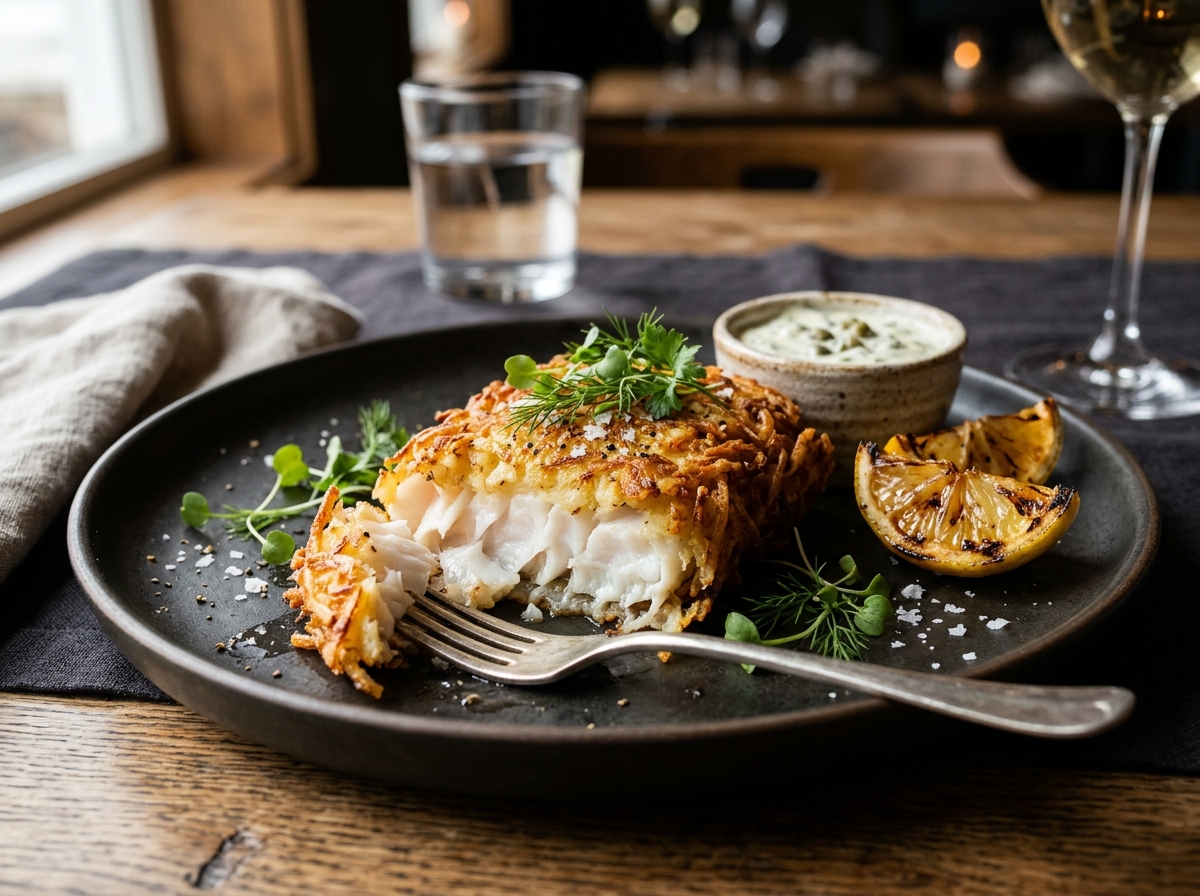
Visual: The shredded potato mantle displays a deep golden brown hue with dark amber blistered tips and zero pale starch spots. When flaked with a fork, the cod interior shows translucent, snow-white muscle segments that glisten with natural moisture. The accompanying dill remoulade exhibits a creamy nappe consistency flecked with vivid green herb specks. Auditory: A steady, vigorous sizzle rings out as oil micro-droplets circulate across the potato filaments in the air fryer basket. Tapping the finished crust with a metal spoon produces a sharp, scratchy, hollow sound that confirms complete moisture evaporation. Aroma: A fragrant wave of toasted russet potato and sweet garlic scent wafts from the air fryer exhaust vents, underscored by the clean oceanic freshness of wild cod without any fishy ammonia notes. Tactile: The exterior potato crust yields a resounding crunch before giving way to fork-tender, silky fish flakes that part effortlessly in large sheets. The flesh springs back gently without feeling rubbery or mushy.
Troubleshooting & Testing Notes
Surface moisture on the fish is the main culprit. Make sure the fillets are patted completely bone-dry before dusting with cornstarch and brushing with the tacky egg white and Dijon emulsion. Press the potato shreds firmly with your palms so they form a continuous interlocking jacket.
The air fryer temperature was too high. Convection fans intensify heat transfer; 380°F (193°C) is the sweet spot. If your air fryer runs hot, lower to 370°F (188°C) for the first 8 minutes before finishing at 380°F.
The fish was overcooked past 145°F (63°C), squeezing out coagulated protein curd. Use an instant-read probe thermometer and pull the fish at 135°F to 140°F (57°C to 60°C); gentle carryover resting on a wire rack will finish the center cleanly.
Nutrition Facts
Calculated per 1 serving
Recommended Equipment
- 6-quart basket air fryer with perforated crisper tray
- Stainless steel or silicone-tipped fish spatula
- Rimmed baking sheet with heavy paper towels
- Instant-read digital probe thermometer
- Wire cooling rack
- Shallow wide-rimmed breading dishes
Love this recipe?
Get chef-tested dinner recipes sent to your inbox every day.